Written 2021 · Reframed 2026
The Form's the First to Go
Capacity used to be the scarce thing. It is not any more. A note I wrote to myself about pacing in 2021, and why the reason I needed it has inverted.
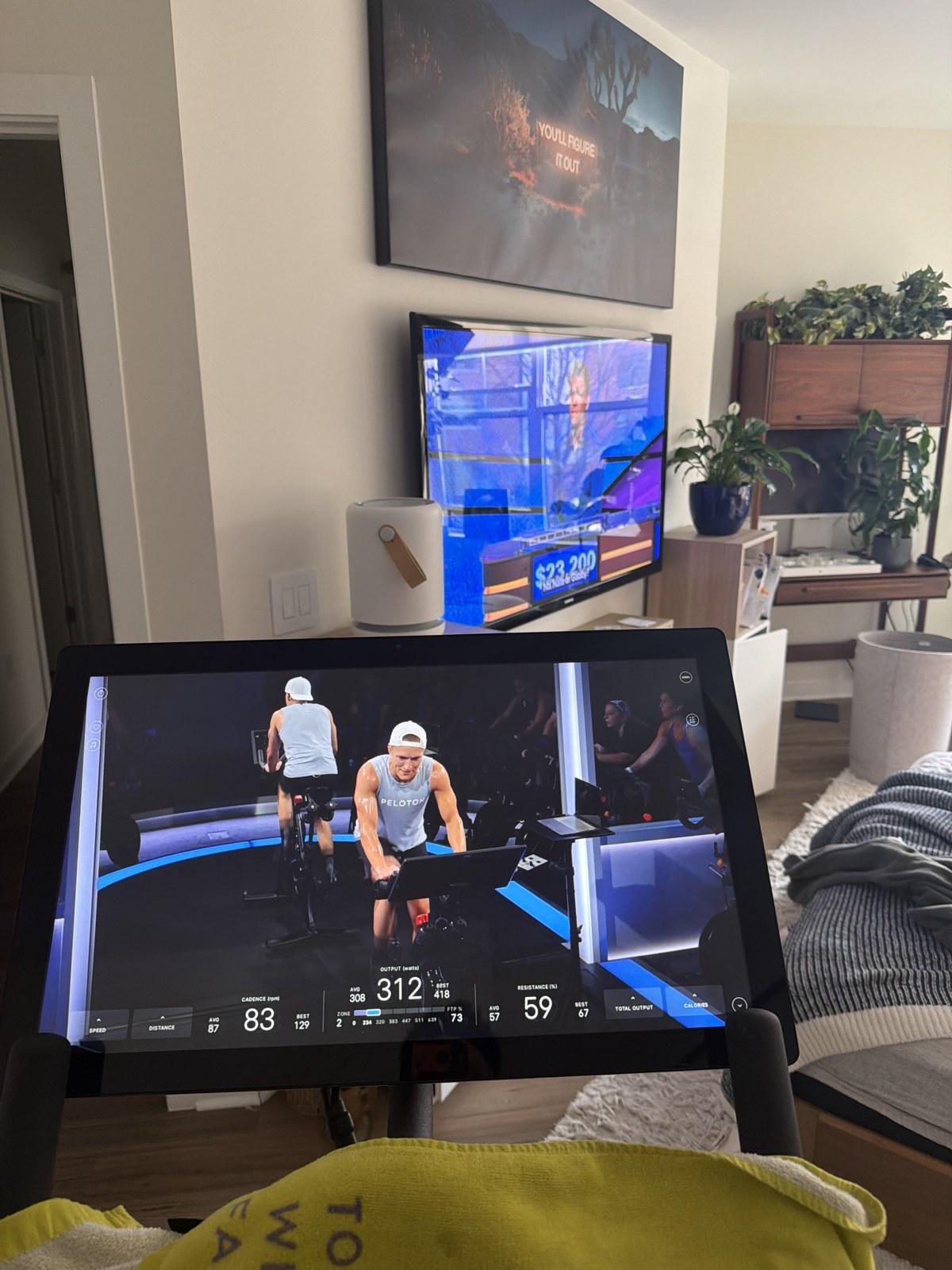
In 2021 what broke my pacing was that the boundaries went away. The office was the kitchen, the kitchen was the school, and the small places I used to recover in, the walk to get coffee, the aimless conversation by the micro-kitchen, quietly stopped existing.
Five years later the boundaries are mostly back. I can leave the house. Nobody is doing algebra at the table while I take a call. And I’m worse at pacing than I was then.
Here’s what changed. Capacity used to be the scarce thing. What I could get done in a day was limited by how fast I could actually do it, and that limit did some of the work of stopping me. That limit is gone. I can work alongside something that doesn’t get tired, doesn’t lose focus at four in the afternoon, and will happily keep going at three in the morning. The ceiling on what a day can contain moved, and it moved a long way.
What didn’t move is me.
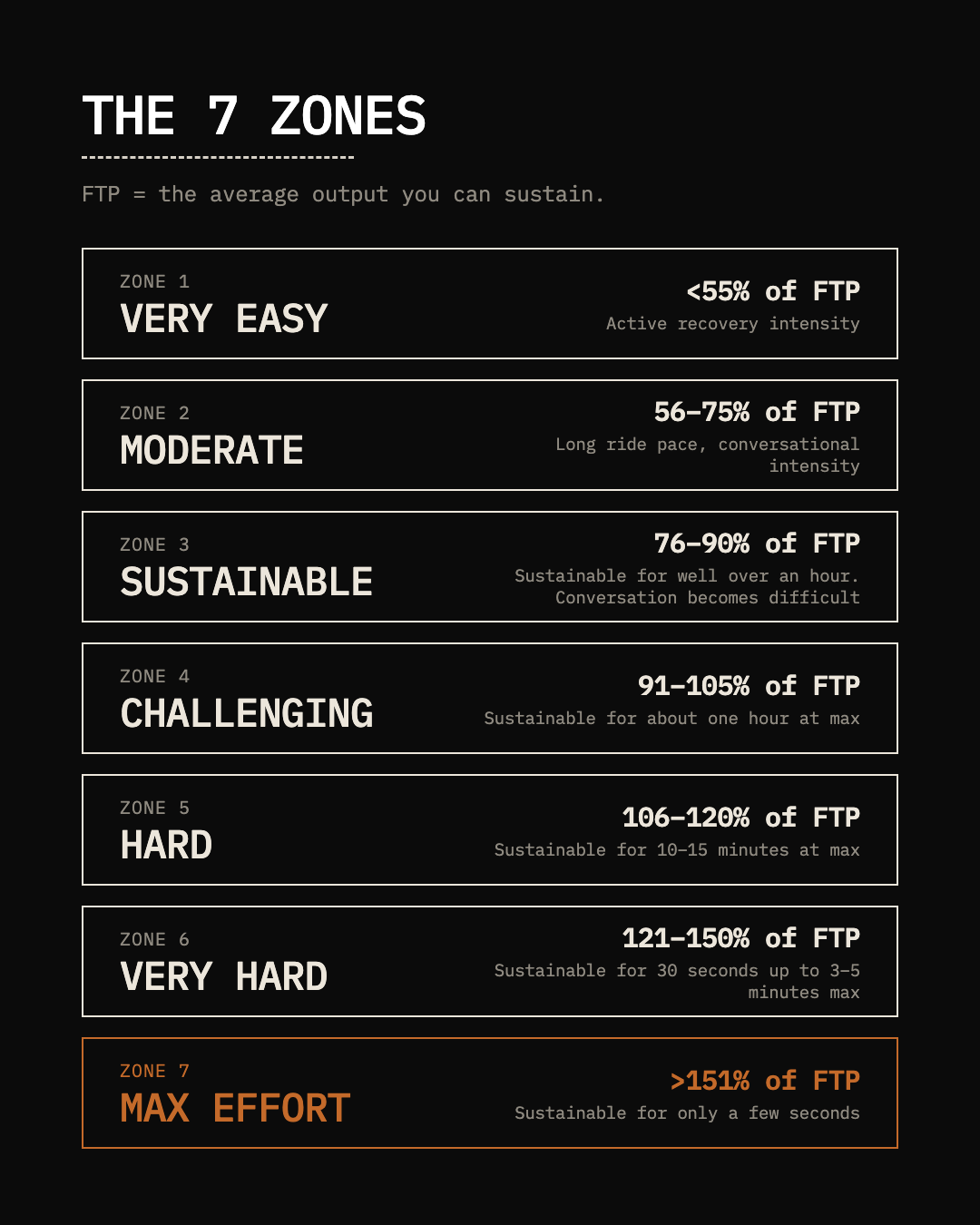
The power-zone material below is really a model of that gap. Zone 7 has always existed and has always been available. Anyone can produce max effort. The insight of the training program was that available and sustainable are two different numbers, and the second one is the one that matters. You don’t get fitter by discovering you can hit Zone 7. You get fitter by knowing how long you can hold each zone and building everything else around it.
Working with AI feels like permanent access to Zone 7. Which is genuinely great, and I wouldn’t give it back. But the tells I wrote about in 2021 are harder to catch now, because the work still looks fine. A shorter fuse, less filter, quality slipping: those used to show up in what I made. Now they mostly show up in me, and the output covers for me.
So the note holds up, but the reason changed. In 2021 I needed to pace because the world had taken my recovery zones away. Now I need to pace because nothing is taking anything away, and there is no natural place to stop.
Which leaves the question I have not answered. When the machine takes the load off, do you take the time back, or do you just do more? I keep choosing more. I do not think that is a decision I am making so much as one I am defaulting into, and the difference between those two things is the whole of what I learned on the bike.
The 2021 note follows, unchanged.
About one year ago, we all began working from home, or “sleeping from the office” as some have come to say. For me, this also meant my home-office was also a homeschool, and to cope I needed a way to get some physical activity. Like many, I was uncomfortable doing this outdoors, and dusted off my Peloton to get some exercise indoors. I’ve loved riding this silly screenbike during the pandemic - I never have to stop for red lights, go as fast as I want, AND I can watch Jeopardy reruns. That being said, exercise bikes can’t go downhill, and it takes a lot of effort to make sure my body can keep up with my mind’s delusions of being an endurance athlete early in the morning.
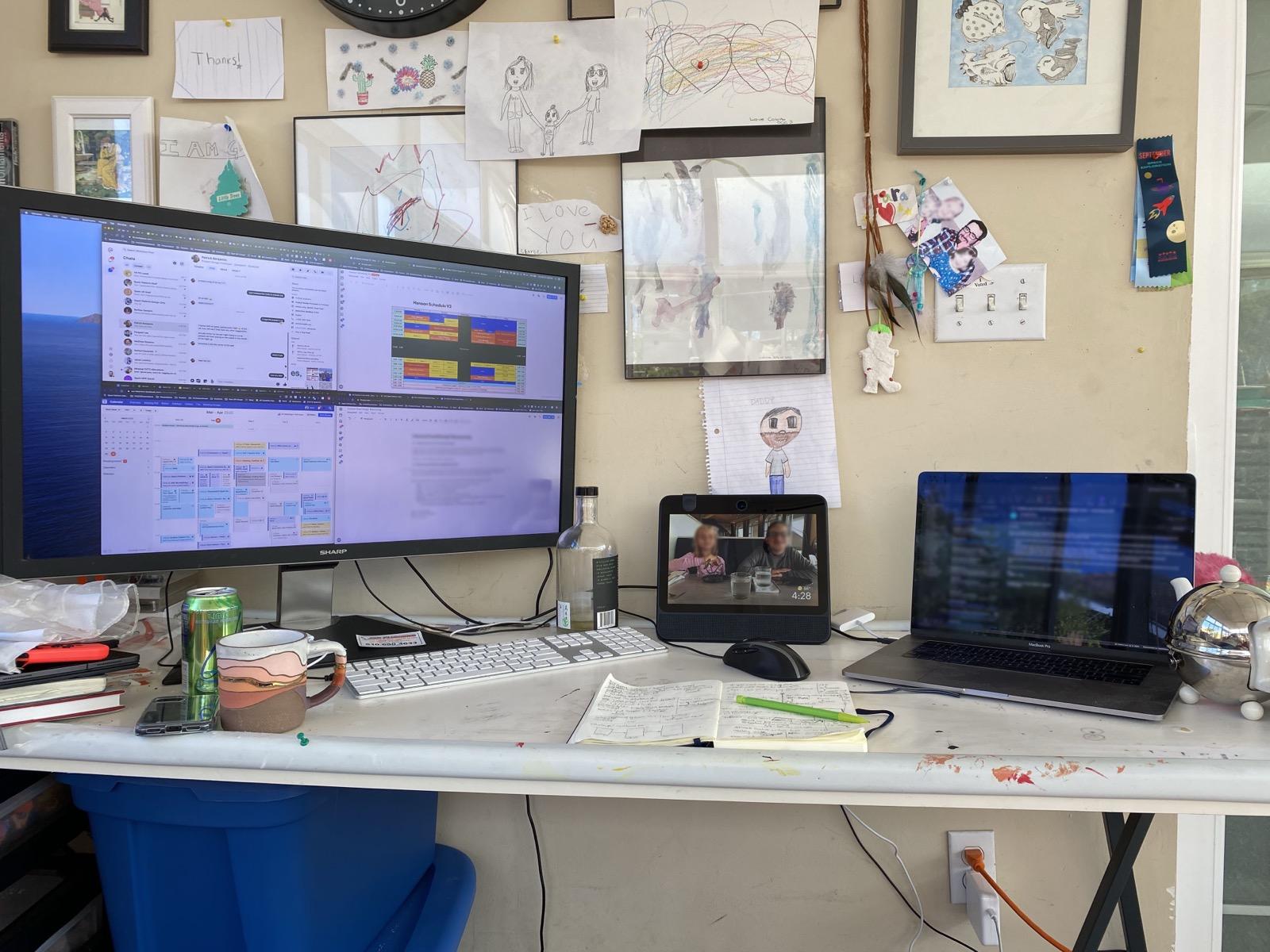
Like many at FB I’ve heard folks say “working here is a marathon not a sprint”, which is true. What is also true however, is that endurance athletes know their bodies and tempos so well that they can accelerate and decelerate when necessary, using form to throttle themselves when they need to recover. Here’s some perspective I’ve gained, and steps you can take when you may have been pushing yourself too hard for too long.
The Basics + Some Preventative Steps
The philosophy of the training program I’ve been doing is basic - one’s physical body is the engine for your bicycle, and your output can be broken down into 7 zones of effort (shown to the right [below]). Zone 1 is easy peasy lemon squeezy and Zone 7 is difficult difficult lemon difficult. The more difficult the zone, the less capable a human is of sustaining the effort for a long time. This is true if you are Matt Hanson the Design Manager or Matt Hanson the world champion triathlete.
As people, we are capable of so much, and in knowing our physical limits, we can sustain great efforts for long periods of time. When I first started riding, I could barely ride longer than 20 minutes. When my form began to crumble, I experienced pain. The harder I pushed, more it hurt. By improving my form and understanding where, when, and how I needed to recover (both on and off the bike) I made great progress.
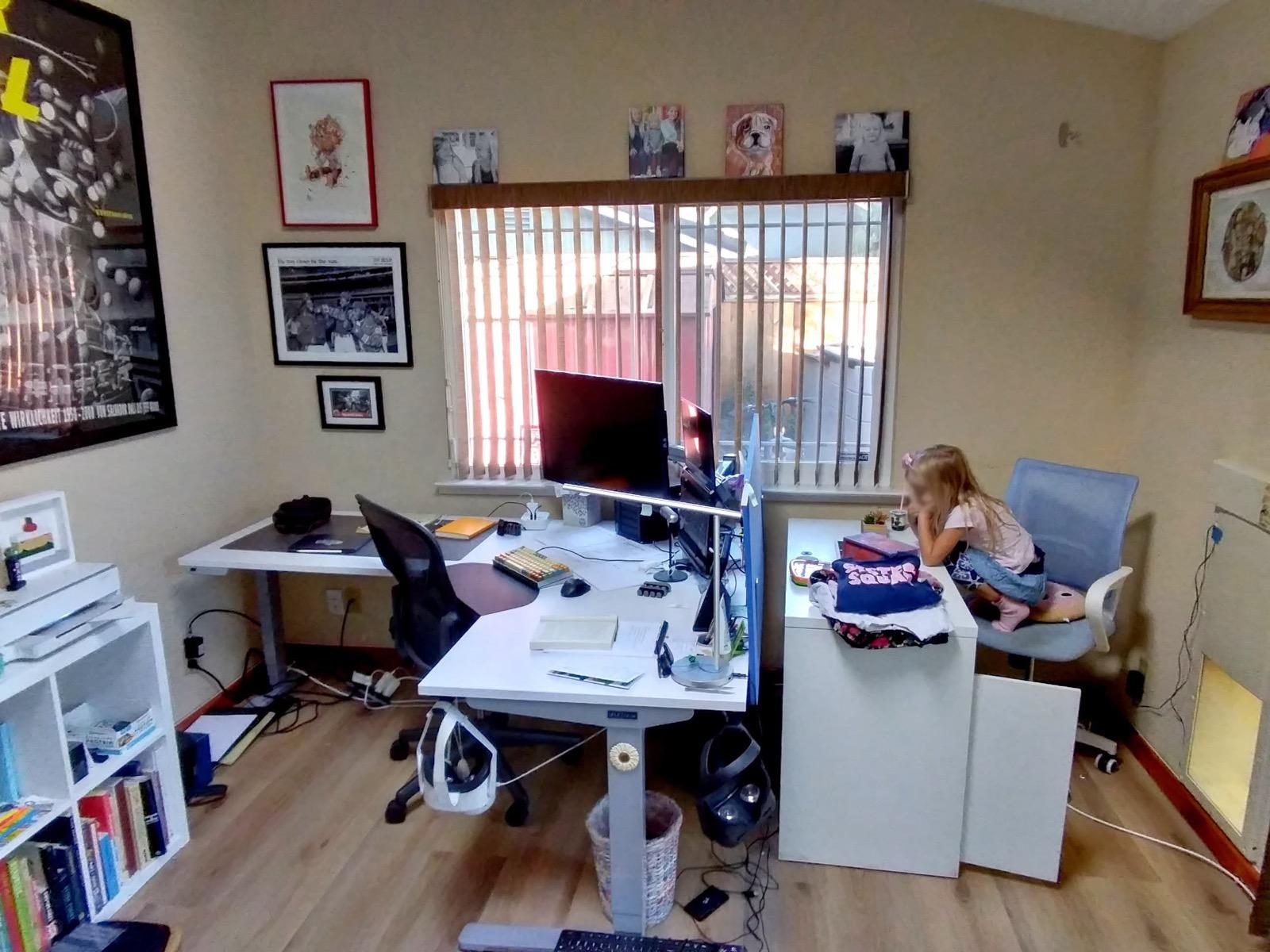
While we are working from home, it can be difficult to find places to slow down and recover. Where we may once have found “recovery” in chatting in the micro kitchen, reflecting at the sweet shop, or grabbing coffee with someone at Philz, our “recovery zones” now contend with significant obligations ranging from family responsibilities to the spectre of loneliness. Make sure to take room to reduce the amt of energy you spend from time to time, and even try to build it into your planning proactively, to make sure we can all be effective in the long haul.
By understanding form, and how to leverage it effectively, I made significant sustainable improvements. Here are some steps I have found helpful for me YMMV;
Understand your “professional form” as a continuum from “i love this, everything about it, I’m buying dinner for everyone!” to “IDK if I can do this for 5 more minutes without kicking something”. Are you aware of what happens when you are in Zone 7 - max effort hellscape - for too long? Maybe it’s a shorter fuse, less of a filter, or your quality takes a hit. Be mindful of your patterns, and understand what they look like.
When you notice these patterns pay attention, you are “smelling smoke”. Have you been pushing too hard for too long without recovering? Are you losing your form in other areas? If so…
Actively try to pedal down and recover. Take it slow for a bit to be safe. On one end of the spectrum, this could be walking away from the computer for 10 minutes and getting some sunshine or meditating. On the other end, this could mean communicating to your partners and manager that you need to adjust your calendar or take a day to make the space you need to make things more sustainable.
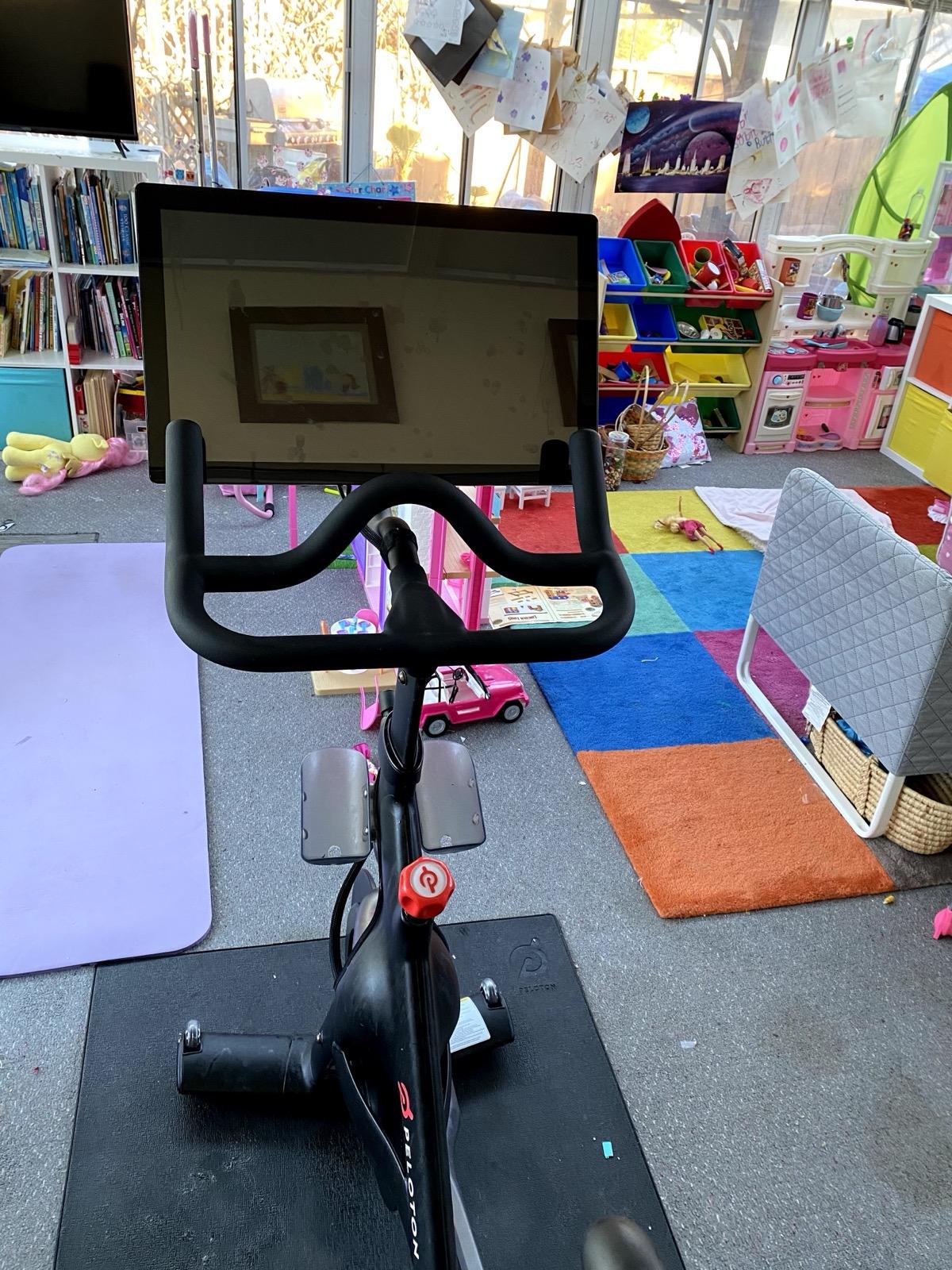
Applying what I learned as a fake-cyclist to my professional form has really helped me keep pace during this time. While this note wasn’t intended to help anyone become an endurance athlete, I hope what I learned while pretending to be one can help you when the pace feels grueling.
Matt Hanson · Rationale · written 2021, reframed 2026