Orion
UNVEIL · SEPT 2024
The form factor breakthrough
Meta unveiled Orion in September 2024 — “the most advanced pair of AR glasses ever made,” and the first to look and feel like a regular pair of glasses. Transparent lenses, ~70° field of view, EMG wristband for input, holographic displays. The form-factor breakthrough is the headline.
As Senior Design Manager I owned the design through-line across every Day-1 use case — four design teams and their managers — and made separate demos read as one product. That meant the experiences Meta showed publicly: asking the glasses for a recipe from what’s in the fridge, adjusting a family calendar while doing dishes, taking hands-free video calls.
Scope at a glance
4
Day-1 use cases owned
4
design teams + their managers
~70°
field of view
2024
public unveil
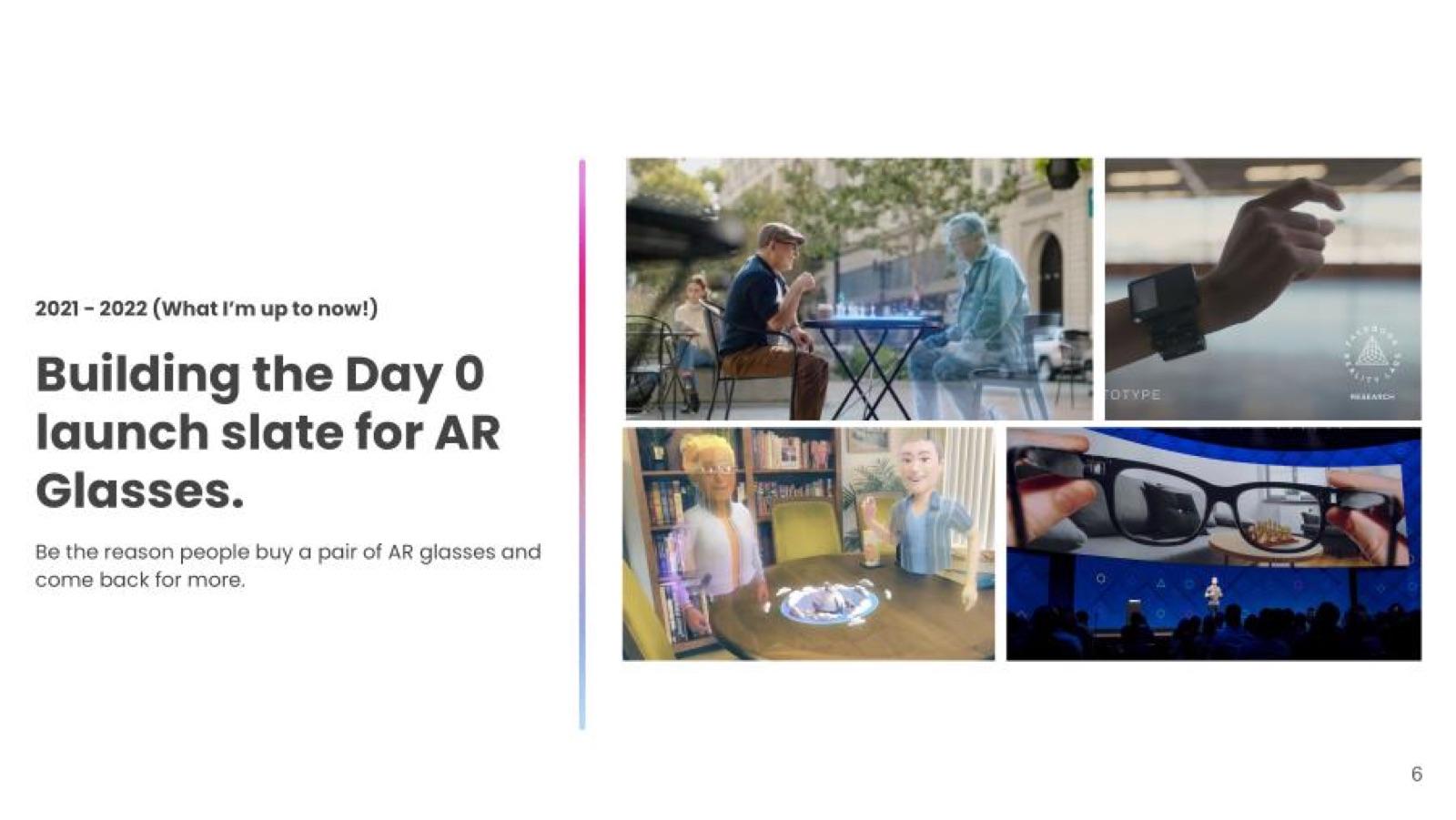
The Day-0 launch slate · 2021 — 2022
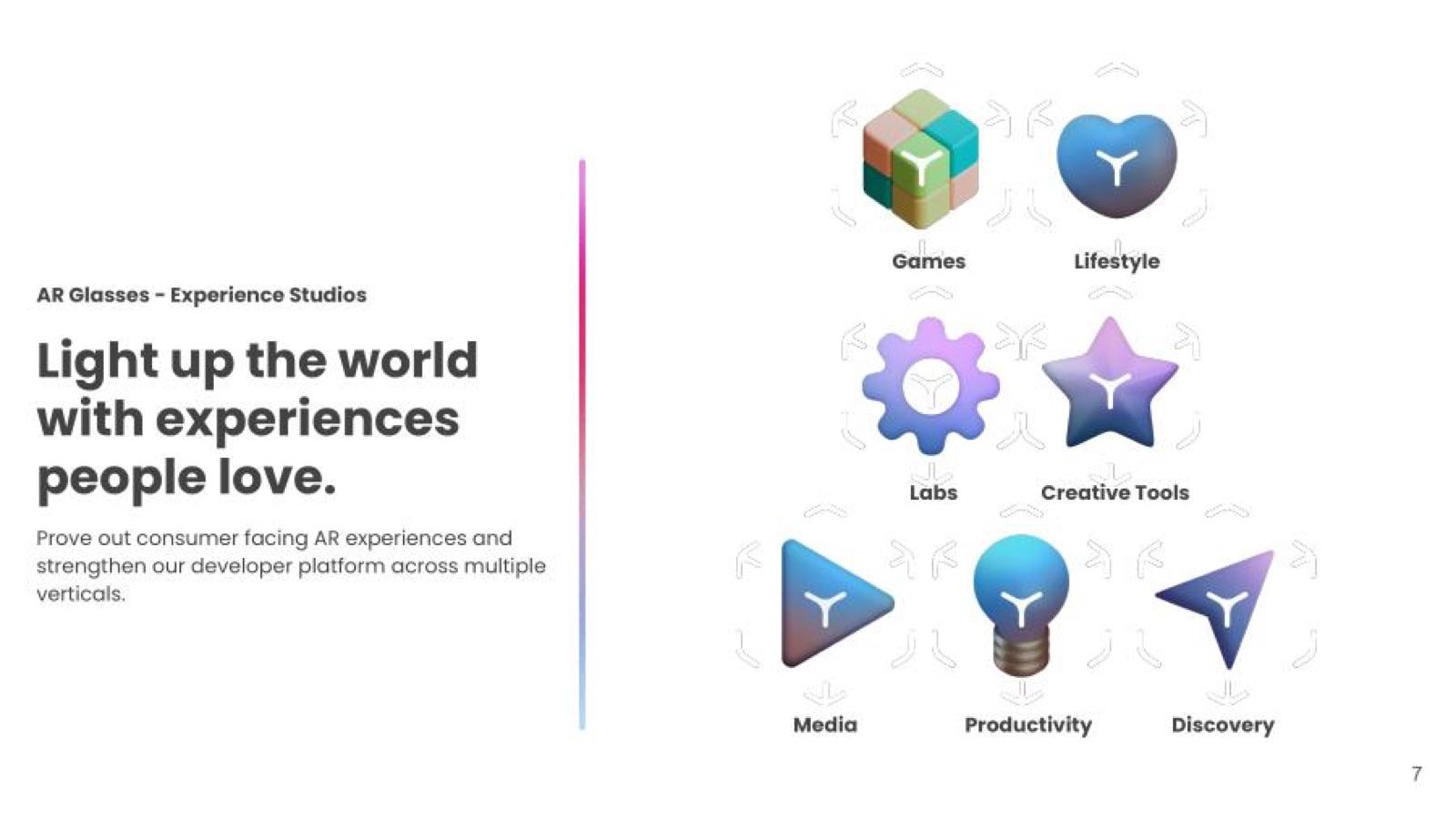
AR Glasses · Experience Studios · seven verticals
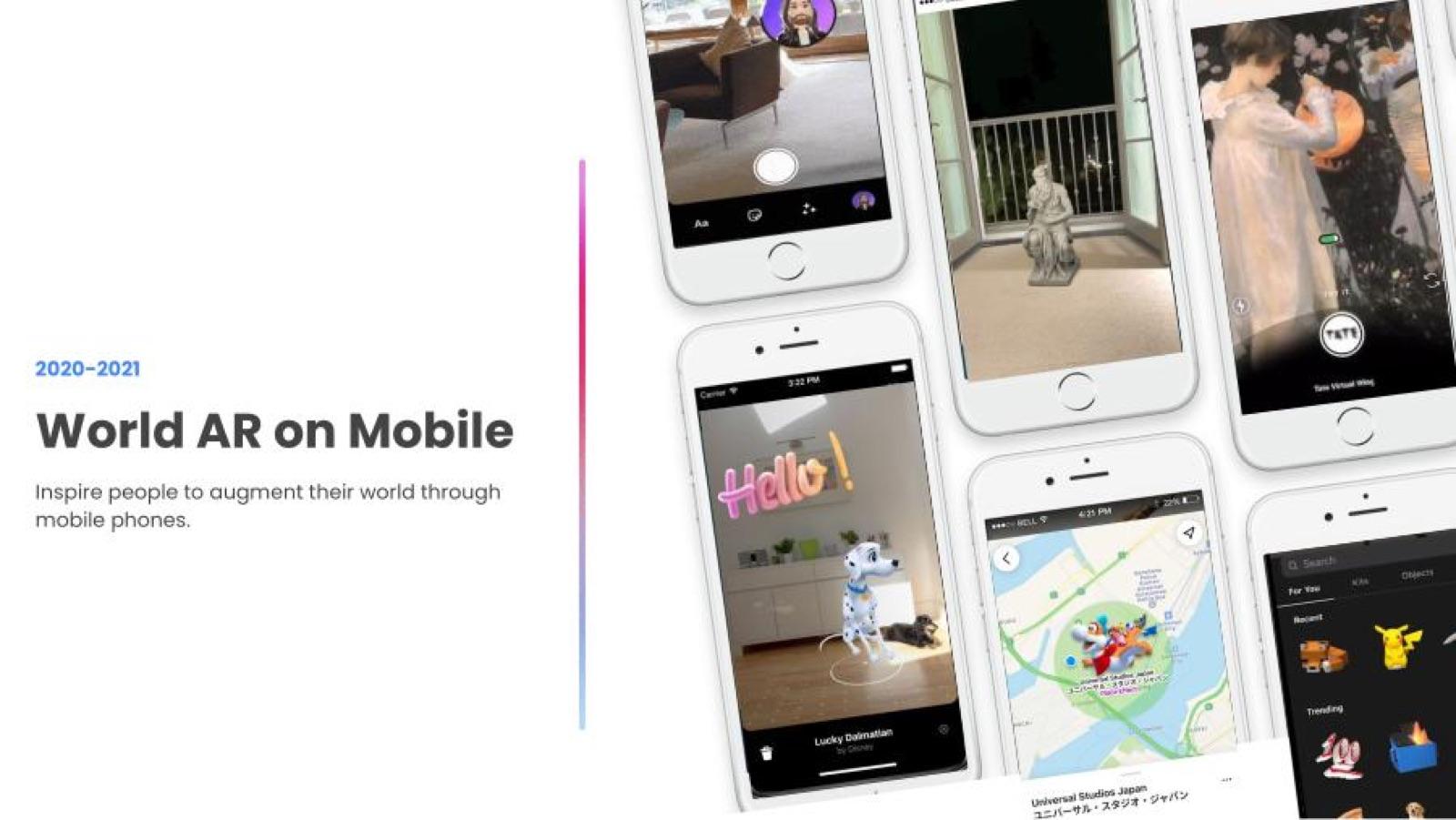
Mobile groundwork · the location-anchored AR work that fed Day-1 use cases
DAY-1 APPS · PUBLIC DEMOS
The apps that earned the form factor
Meta chose the public Day-1 apps to make one case: AR glasses earn everyday life only by helping in hands-busy moments — useful before spectacular.
Recipe assistance
Contextual visual recognition reads what’s in the fridge, surfaces a recipe you can make, and walks the prep step-by-step on the lens — voice in, display out, hands on the food. The kitchen is the test bed: the most hands-busy room in the house.
Multi-screen multitasking
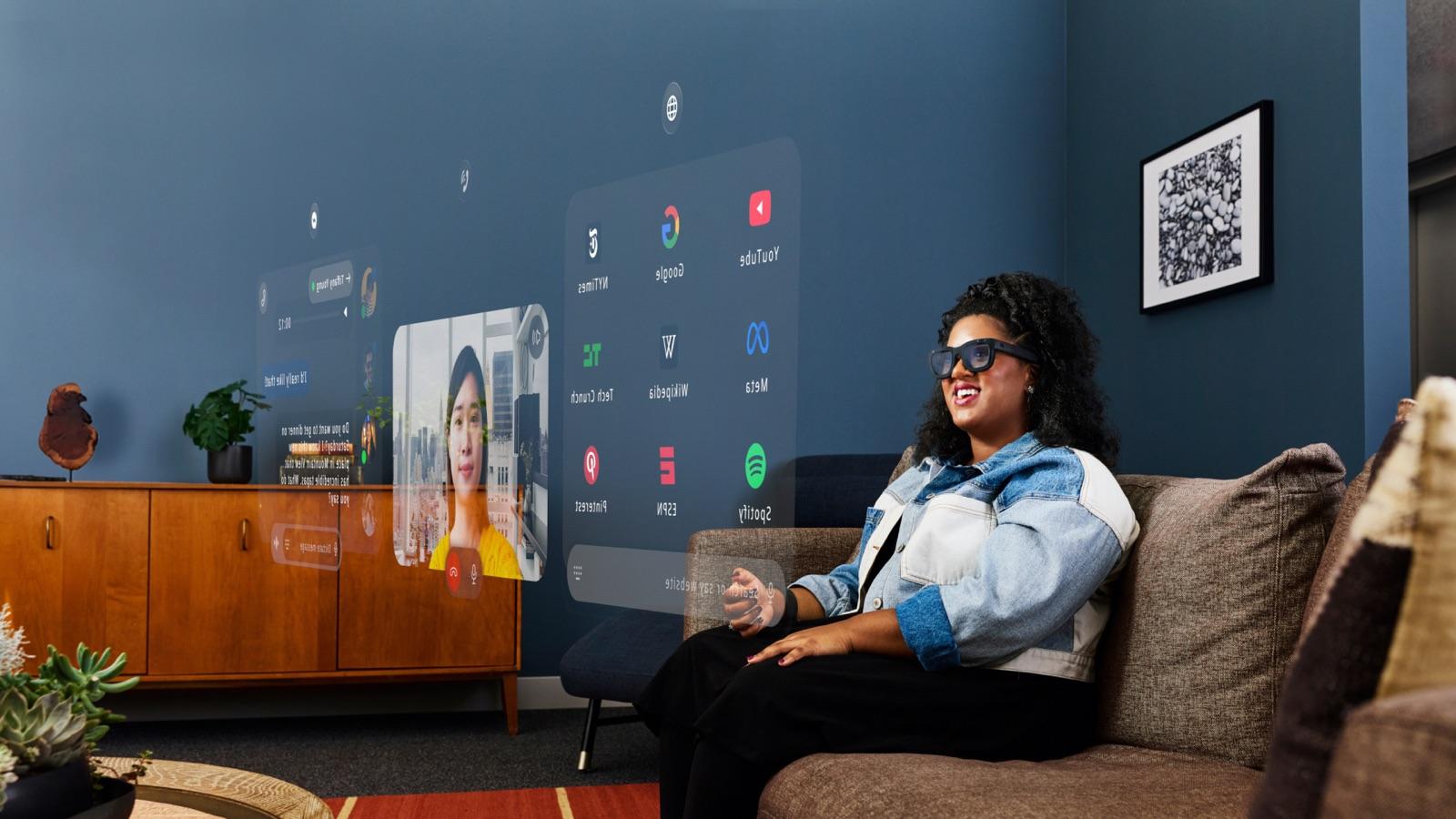
Multiple floating screens arranged in physical space — mail beside calendar beside a video call — addressed at a glance while the wearer keeps doing something else. The display becomes a workspace, not a notification rail.
Hands-free video calls
Take and hold a video call without picking up a device. Presence travels with you — a glance and a tap replace pulling out a screen.
Augments
Persistent objects pinned to the wearer’s space — clocks, weather, photos, calendars that live in physical locations across sessions. The glasses-and-headset shared layer lets a room hold ambient information without becoming a screen.
Shipped by my team · Orion Pong
FIG. 04 · Orion Pong loop · holographic table-tennis on the lens
TEAMS · MULTIDISCIPLINARY
The teams I managed
Each Day-1 app had its own multidisciplinary team — product, design, prototyping, engineering, research — and Senior Design Manager meant holding direction across all of them at once. Direct teams covered Experience Design, Design Prototyping, Production Design, and UX Research. Partner teams spanned hardware engineering, software platform, and AI research.
Prototyping answered most of the questions. AR glasses had no precedent UI, no muscle memory, no “use the iOS pattern.” Every Day-1 use case was built in code, worn on the head, lived with for weeks, then redesigned. Prototypers turned hypotheses into something a person could try and react to — and that loop drove nearly every meaningful decision in the program.
The split looked roughly like this:
Experience Design
Use-case verticals — recipe, multi-screen, calls, augments. One design lead per vertical, dotted-line into the Senior Design Manager.
Design Prototyping
Built the experiences in code, on-device. Wearable prototypes, simulator builds, and end-to-end use-case integrations — most Day-1 decisions came from what worked on your head, not what looked right in Figma.
Production Design
The render-and-ship layer turning concept work into demoable, photographable, recordable experiences for the unveil.
UX Research
Field studies in real homes, ethnographic work on hands-busy moments, usability runs against the EMG wristband and voice loop.
Quest MR partnership
Cross-team work integrating MR Mode and the Augments system so the persistent-object language stayed consistent across glasses and headset.
Hardware + AI partners
Coordination with the optics, EMG, and Embodied-AI teams — translating speculative capabilities into shipping experiences.
05 / 09 · END OF CHAPTER
Continue → Spark AR